Updated: February 6, 2024
Introduction
Primary care providers (PCP) identify and engage patients in collaborative care, make diagnoses, and treat patients. The resource below describes the role of the PCP in more detail.
A printable PDF is available for download; however, please note that this document may not conform to the WCAG-2 accessibility standards.
The Role of the Primary Care Provider in Collaborative Care
The role of the primary care provider (PCP) in Collaborative Care (CoCM) is to oversee all aspects of a patient's behavioral health care, including encouraging the patient's participation, prescribing medications, and making referrals to specialty mental health care when needed. PCPs work in close collaboration with the patient's behavioral health care manager (BHCM) and psychiatric consultant. This is summarized below.
Collaborative Care Team
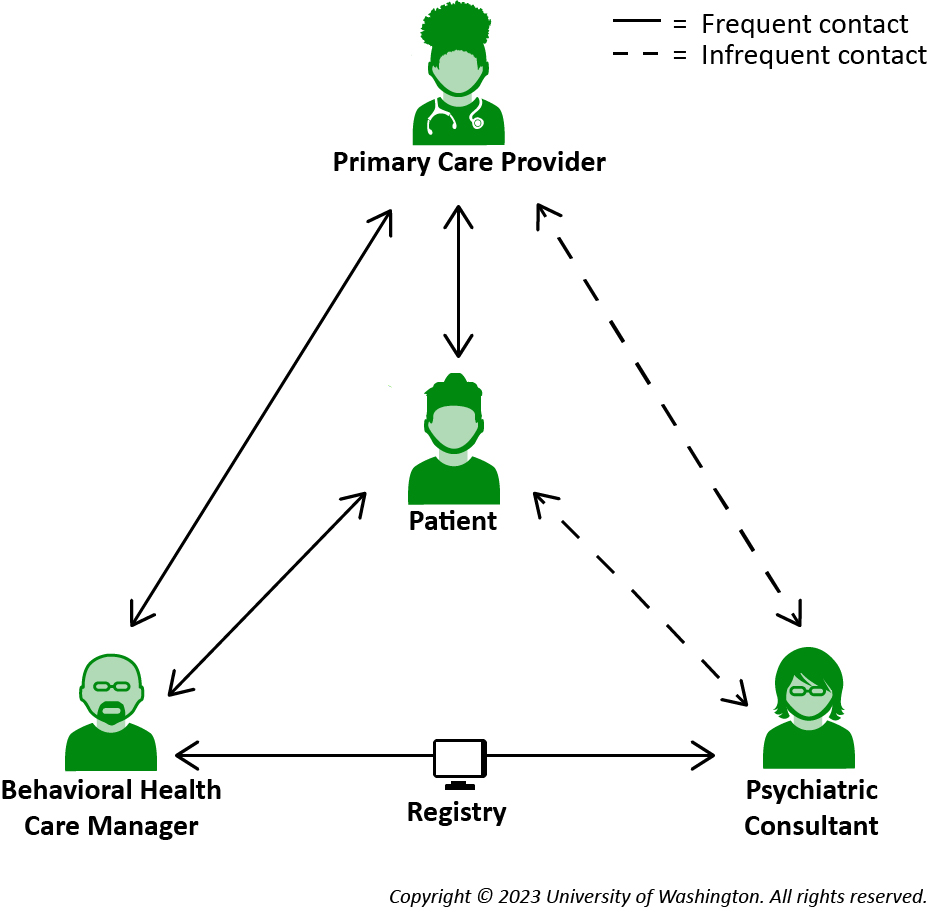
Identifies and Engages
- Introduces Collaborative Care to a patient
- Acquires informed patient consent
- Initiates a warm connection to a BHCM
Makes Diagnosis
- Formulates using validated screeners, exams, and history
- Works with care team to diagnose complex behavioral health conditions
- Observes over time and adjusts diagnosis as appropriate
Treats
- Works with care team and patient to develop a treatment plan
- Works with care team to implement treatment and make treatment adjustments
- Prescribes medications as needed
- Addresses safety concerns
- Monitors physical health and potential medication interactions