A printable flyer offering an overview of the AIMS Center’s work to share with your networks.
Resource Type: Handouts
Guide to Creating Collaborative Care Workflows
Introduction:
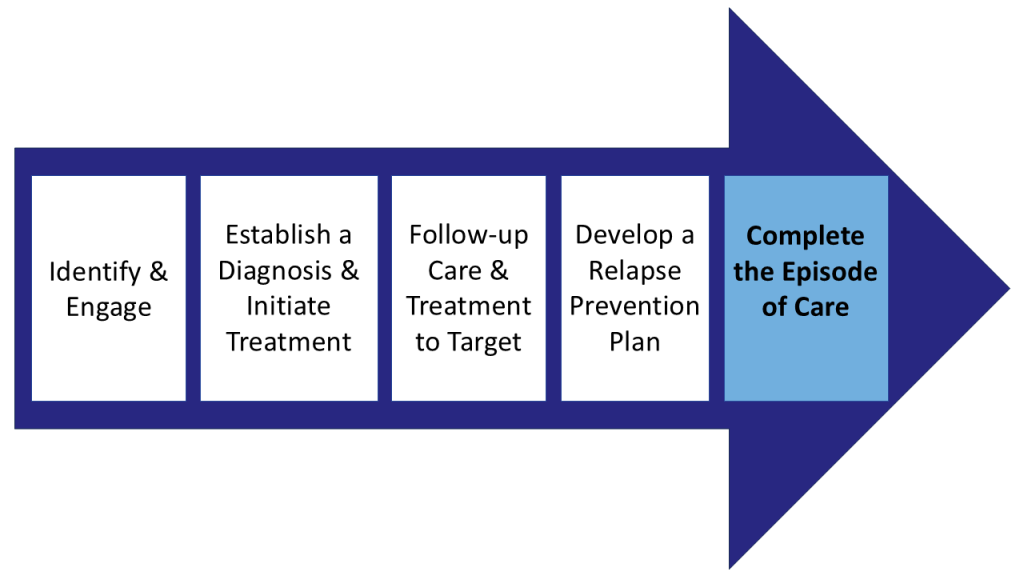
Successful Collaborative Care (CoCM) programs have a defined, detailed workflow that maps the patient journey from screening to the end of an episode of care. These workflows detail the five phases of an episode of CoCM. Each phase has a unique set of tasks tailored to the resources available at the site. These workflows should be accessible to those who use them and describe steps with sufficient detail.
A printable PDF is available for download; however, please note that this document may not conform to the WCAG-2 accessibility standards.
Creating Collaborative Care Workflows
Creating workflows is an iterative, team process. Much like creating a shared vision, this process includes a series of team discussions facilitated by the Clinic Implementation Team (CIT) lead.
Your workflows will be a detailed version of the 5 phases of an episode of Collaborative Care (CoCM). Each phase will have a unique set of tasks, tailored to the resources available at your site. Please see the full CoCM Workflow Development Guide for more details.
We recommend the team create a process map or visual workflow for each of the five phases of an episode of CoCM. Make sure the workflows describe the steps in sufficient detail and are accessible to those who need it.
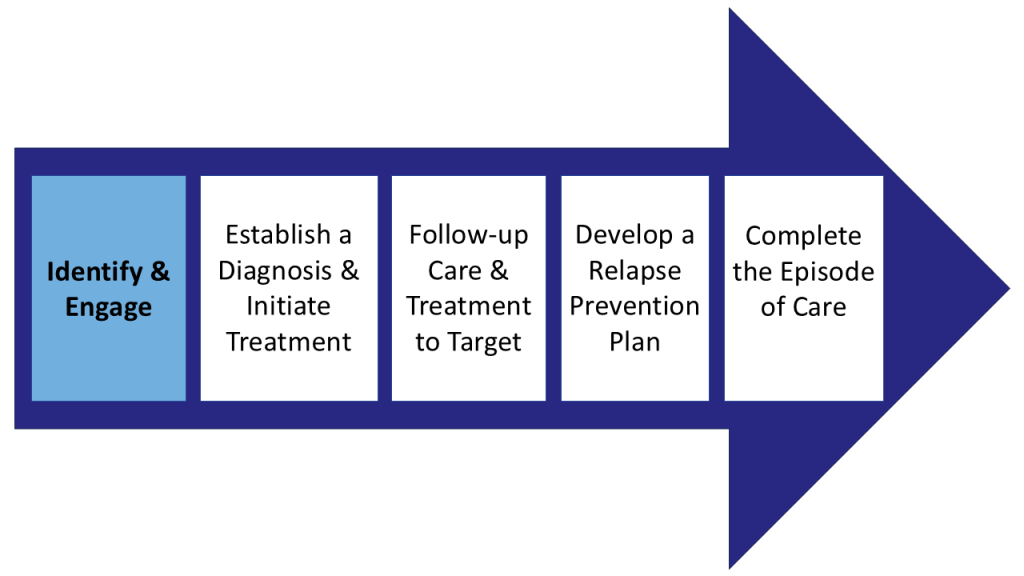
Phase 1: Identify & Engage
- Behavioral health screening &/or population health report, &/or PCP assessment to identify patients
- Introduce CoCM
- Consent patients to participate in CoCM
- Connect patients to the Behavioral Health Care Manager (BHCM)
- When suicidality is identified through the behavioral health screening process, it is important to have a protocol in place
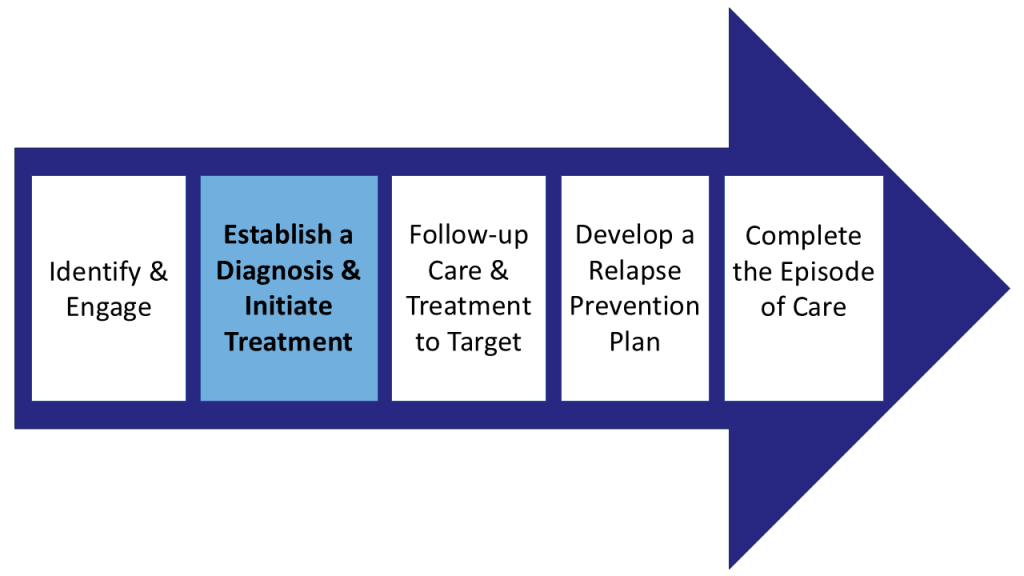
Phase 2: Establish a Diagnosis & Initiate Treatment
- BHCM completes Initial Assessment. Enroll the patient in CoCM and add them to the registry.
- Generate a provisional diagnosis as a CoCM team (PCP, Psychiatric Consultant, BHCM)
- Explore treatment options with the patient (brief evidence- based behavioral interventions, medications, or both)
- Communicate treatment plans with the CoCM team
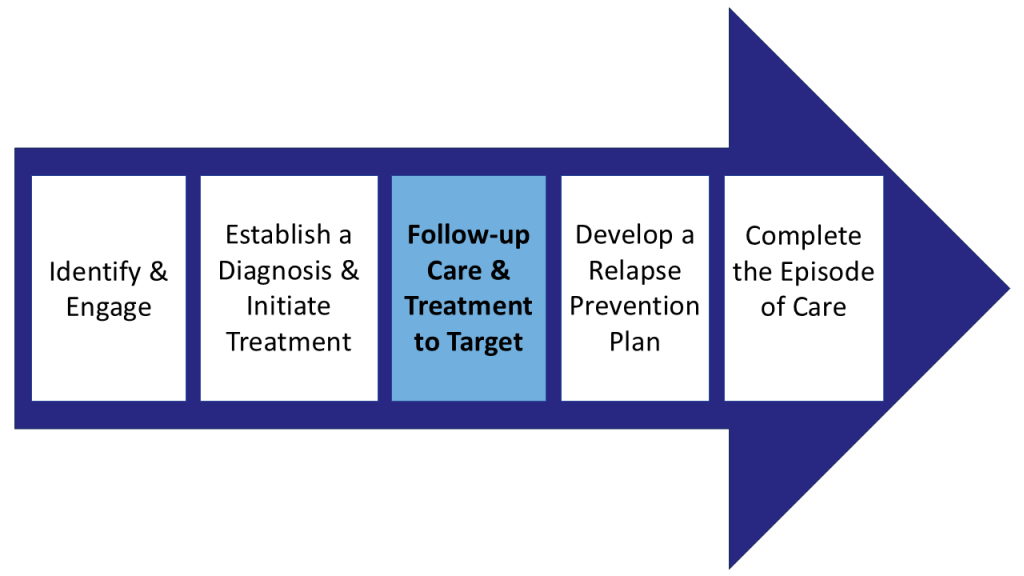
Phase 3: Follow-up Care & Treatment to Target
- Proactive and continuous outreach from BHCM to the patient
- Track patient progress in a registry
- Use a registry to identify patients who need to be discussed at the Systematic Caseload Review (SCR)
- Hold SCR weekly sessions between the BHCM and the Psychiatric Consultant
- Consider the frequency for administration of symptom monitoring tools (e.g. PHQ-9, GAD-7, PCL-5, etc.)
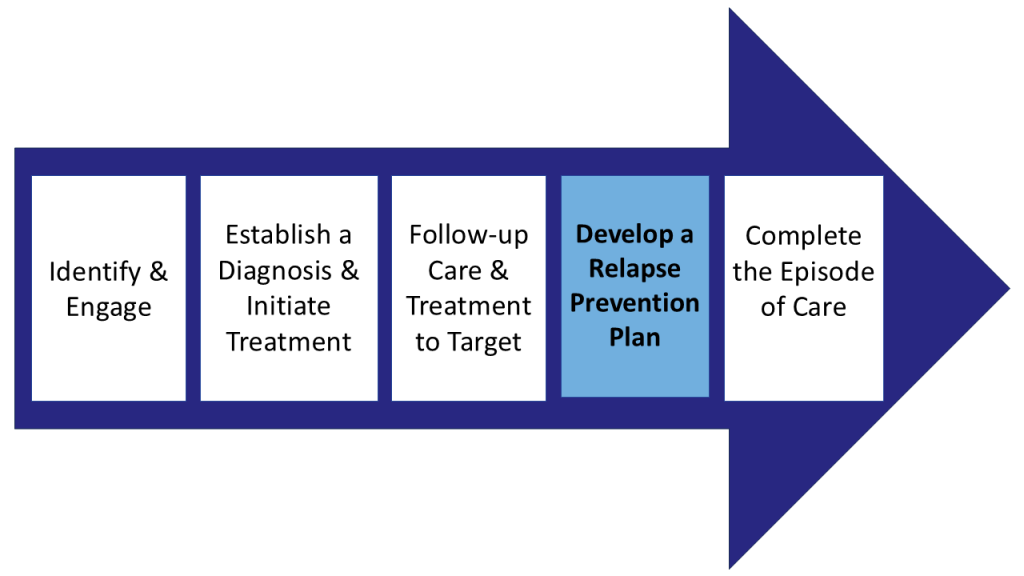
Phase 4: Develop a Relapse Prevention Plan
- Determine criteria to begin a Relapse Prevention Plan (RPP)
- BHCM initiates RPP with the patient
- Determine how often to connect with the patient during the monitoring phase
- Consider how RPP will be documented, stored, and communicated with the patient, as well as the CoCM team
Phase 5: Complete the Episode of Care
- Develop a workflow for each possible completion pathway:
- Transition improved patients back to their PCP for follow-up care, with the option to return for another episode of CoCM if symptoms worsen
- Referral to specialty behavioral health for patients with severe symptoms that are not improving in CoCM
- Discontinue the episode for patients who cannot be reached
Need help building your workflow?
- See Step 2: Plan for Clinical Practice Change of our Implementation Guide
- Get expert assistance from the AIMS Center
Behavioral Activation Patient Education Handout
This handout provides information about depression, explains the benefit of scheduling daily activities, and includes a worksheet for scheduling daily activities. It is for Behavioral Health Care Managers to use when delivering Behavioral Activation to a patient.
Checklist of Collaborative Care Principles and Components
Core principles and components of effective integrated behavioral health care developed in consultation with national experts and support from the John A. Hartford Foundation, the Robert Wood Johnson Foundation, the Agency for Healthcare Research and Quality, and the California HealthCare Foundation.
Behavioral Health Care Manager Role and Job Description
The Behavioral Health Care Manager is responsible for coordinating and supporting mental health care within the clinic and for coordinating referrals to clinically indicated services outside the clinic. The Behavioral Health Care Manager may provide evidence-based treatments or work with other mental health providers when such treatment is indicated.
The job description below provides a comprehensive list of the duties and responsibilities required of a Behavioral Health Care Manager.
Create a Shared Vision for Collaborative Care
A shared organizational vision is a concrete way for team members within an organization to understand the purpose of a program. A powerful vision statement will stretch expectations and professional aspirations while helping staff step outside of their comfort zone. Visioning is an important process that provides focus and enables Collaborative Care (CoCM) teams to build a shared understanding of their common purpose and future goals.
Use the following guide (below) to facilitate the development of a shared vision of CoCM that maps onto existing behavioral health services. The document goes over why a shared vision is important and the steps that are required to create a shared vision within a CoCM framework.
Collaborative Care Readiness Checklist
Our readiness checklist will help you assess if your practice is ready to implement Collaborative Care.
Case Review: Care Manager with Psychiatric Consultant
An outline of what a Behavioral Health Care Manager should be prepared to discuss about a patient with a Psychiatric Consultant during a consultation.
Psychiatric Consultant Role and Job Description
The Psychiatric Consultant supports the prescribing medical provider and Behavioral Health Care Manager in treating patients with behavioral health problems. They will typically consult with the Behavioral Health Care Manager on a weekly basis to review the treatment plan and provide treatment suggestions for patients who are new or not improving as expected.
The resource below includes a PDF of a comprehensive description of the duties, responsibilities, resource requirements and typical workload of a Psychiatric Consultant.
Introducing your Care Team
Educating your patients about Collaborative Care and what they can expect from it is crucial to the care model’s success. Patient engagement and ownership of their care plan are key aspects of patient-centered team care, one of the five principles of Collaborative Care. Use this template to introduce your Collaborative Care team to patients. Also available in Spanish.