This document contains the key components health systems should consider when hiring a virtual Collaborative Care vendor.
Implementation Tool: Implementation
Guide to Creating Collaborative Care Workflows
Introduction:
Successful Collaborative Care (CoCM) programs have a defined, detailed workflow that maps the patient journey from screening to the end of an episode of care. These workflows detail the five phases of an episode of CoCM. Each phase has a unique set of tasks tailored to the resources available at the site. These workflows should be accessible to those who use them and describe steps with sufficient detail.
A printable PDF is available for download; however, please note that this document may not conform to the WCAG-2 accessibility standards.
Creating Collaborative Care Workflows
Creating workflows is an iterative, team process. Much like creating a shared vision, this process includes a series of team discussions facilitated by the Clinic Implementation Team (CIT) lead.
Your workflows will be a detailed version of the 5 phases of an episode of Collaborative Care (CoCM). Each phase will have a unique set of tasks, tailored to the resources available at your site. Please see the full CoCM Workflow Development Guide for more details.
We recommend the team create a process map or visual workflow for each of the five phases of an episode of CoCM. Make sure the workflows describe the steps in sufficient detail and are accessible to those who need it.
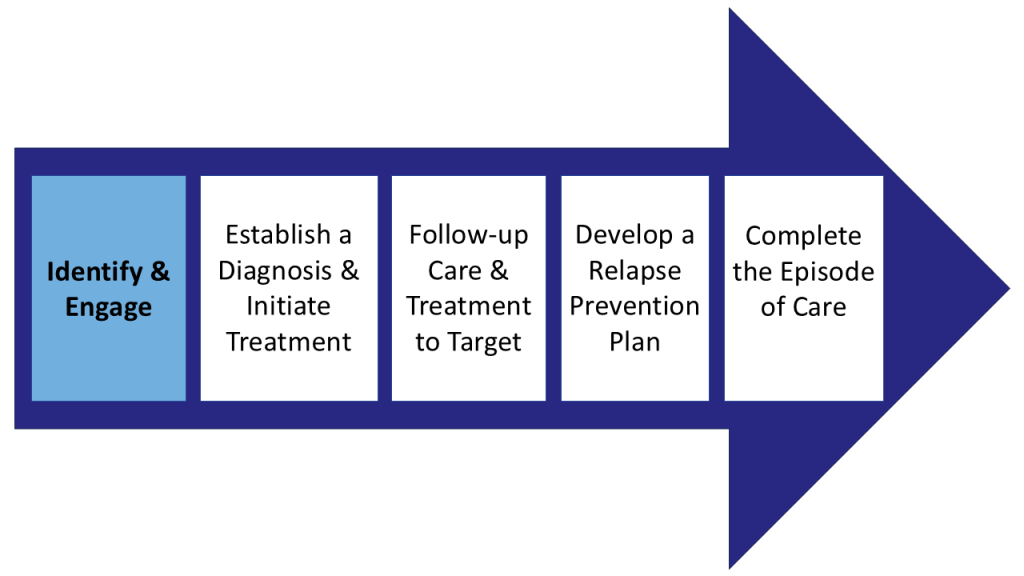
Phase 1: Identify & Engage
- Behavioral health screening &/or population health report, &/or PCP assessment to identify patients
- Introduce CoCM
- Consent patients to participate in CoCM
- Connect patients to the Behavioral Health Care Manager (BHCM)
- When suicidality is identified through the behavioral health screening process, it is important to have a protocol in place
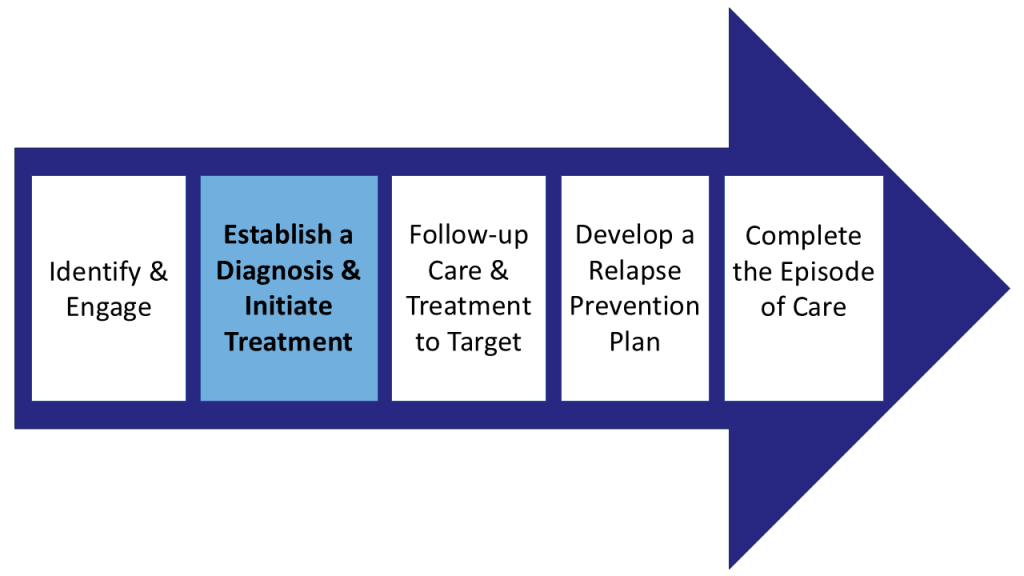
Phase 2: Establish a Diagnosis & Initiate Treatment
- BHCM completes Initial Assessment. Enroll the patient in CoCM and add them to the registry.
- Generate a provisional diagnosis as a CoCM team (PCP, Psychiatric Consultant, BHCM)
- Explore treatment options with the patient (brief evidence- based behavioral interventions, medications, or both)
- Communicate treatment plans with the CoCM team
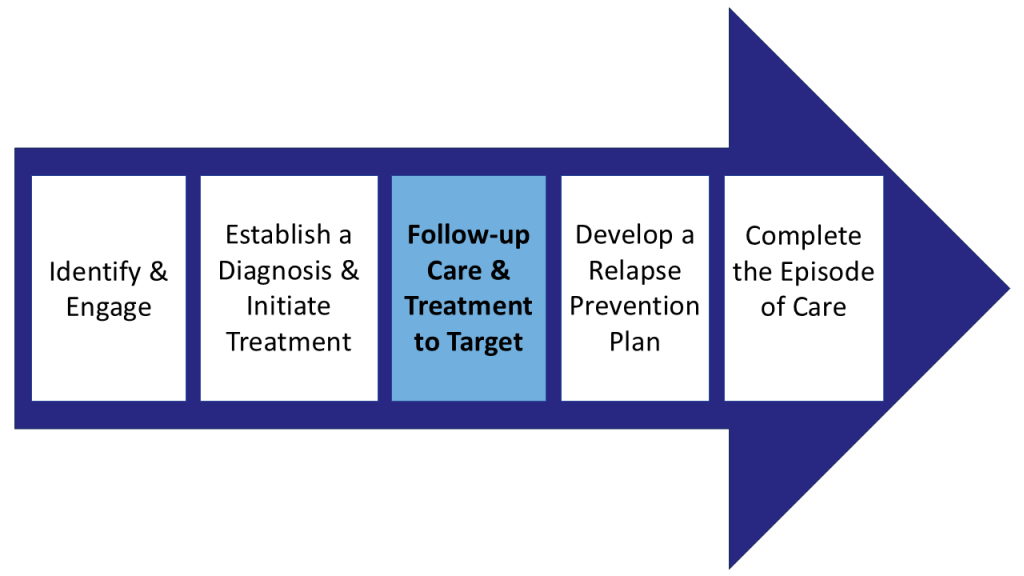
Phase 3: Follow-up Care & Treatment to Target
- Proactive and continuous outreach from BHCM to the patient
- Track patient progress in a registry
- Use a registry to identify patients who need to be discussed at the Systematic Caseload Review (SCR)
- Hold SCR weekly sessions between the BHCM and the Psychiatric Consultant
- Consider the frequency for administration of symptom monitoring tools (e.g. PHQ-9, GAD-7, PCL-5, etc.)
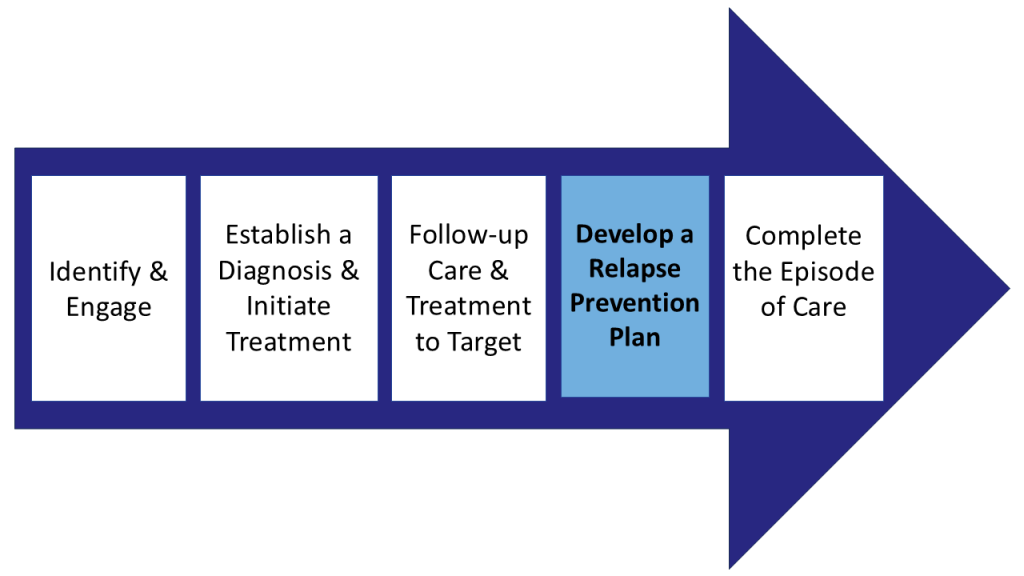
Phase 4: Develop a Relapse Prevention Plan
- Determine criteria to begin a Relapse Prevention Plan (RPP)
- BHCM initiates RPP with the patient
- Determine how often to connect with the patient during the monitoring phase
- Consider how RPP will be documented, stored, and communicated with the patient, as well as the CoCM team
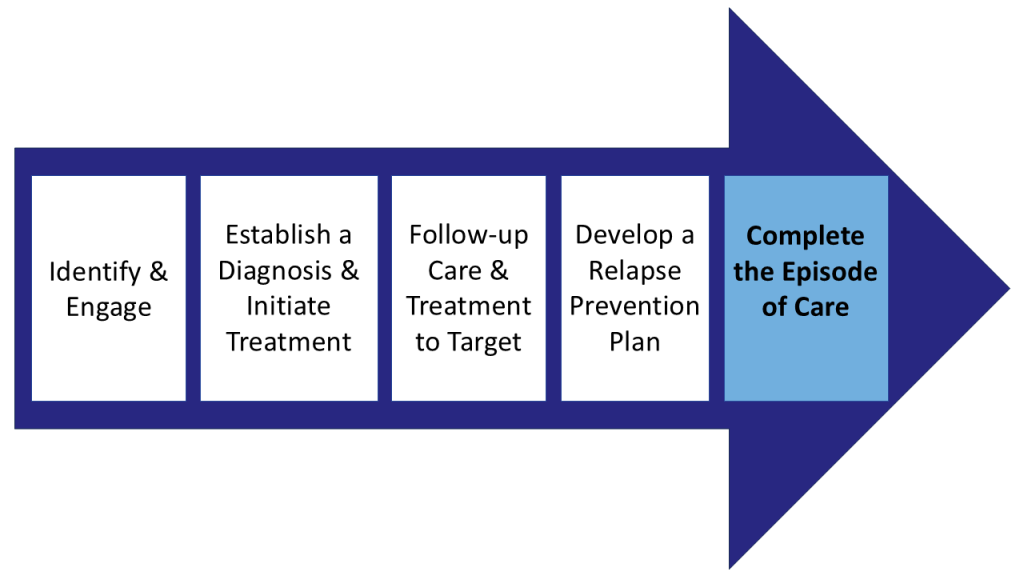
Phase 5: Complete the Episode of Care
- Develop a workflow for each possible completion pathway:
- Transition improved patients back to their PCP for follow-up care, with the option to return for another episode of CoCM if symptoms worsen
- Referral to specialty behavioral health for patients with severe symptoms that are not improving in CoCM
- Discontinue the episode for patients who cannot be reached
Need help building your workflow?
- See Step 2: Plan for Clinical Practice Change of our Implementation Guide
- Get expert assistance from the AIMS Center
Collaborative Care Implementation Guide
This guide is for multi-disciplinary, primary care teams seeking to improve care access and behavioral health outcomes for their patients through implementing Collaborative Care. Centered around the core principles of Collaborative Care, this guide serves as a roadmap to healthcare leaders, managers, clinicians, and staff in primary care as they:
- start a new Collaborative Care program, or
- partner with community and behavioral health agencies.
For training support and technical assistance implementing Collaborative Care reach out to the AIMS Center at: uwaims@uw.edu. Research has shown that clinics receiving implementation support from the AIMS Center have significantly better patient outcomes.
Collaborative Care Readiness Checklist
Our readiness checklist will help you assess if your practice is ready to implement Collaborative Care.
Create a Shared Vision for Collaborative Care
A shared organizational vision is a concrete way for team members within an organization to understand the purpose of a program. A powerful vision statement will stretch expectations and professional aspirations while helping staff step outside of their comfort zone. Visioning is an important process that provides focus and enables Collaborative Care (CoCM) teams to build a shared understanding of their common purpose and future goals.
Use the following guide (below) to facilitate the development of a shared vision of CoCM that maps onto existing behavioral health services. The document goes over why a shared vision is important and the steps that are required to create a shared vision within a CoCM framework.
Caseload Size Guidance for Behavioral Health Care Managers
This guidance will help health care organizations think about the questions to ask when determining an optimal caseload size for a Behavioral Health Care Manager. In addition, we provide two examples of different caseloads and considerations for scheduling patients.
Developing Protocols for Suicide Prevention in Primary Care
Introduction
Primary care clinics have a responsibility to provide effective and efficient suicide safe care that is accessible to all patients and staff. Developing a thoughtful and clear protocol and workflow for responding to suicidality in your primary care setting will empower staff to know how to act as well as help keep patients and staff safe.
The resource below contains information about screening and identification, conducting risk assessments, response and follow-up to suicide risk, as well as several additional resources. This information is intended to guide primary care clinics to refine existing protocol(s) for responding to patients presenting with suicidality or violent behavior in a primary care clinic.
A printable PDF is available for download; however, please note that this document may not conform to the WCAG-2 accessibility standards.
Developing Protocols for Suicide Prevention in Primary Care
Primary care clinics have a responsibility to provide effective and efficient suicide safe care that is accessible to all patients and staff. Developing a thoughtful and clear protocol and workflow for responding to suicidality in your primary care setting will empower staff to know how to help keep patients safe. This information is intended to guide primary care clinics to refine existing protocol(s) for responding to patients presenting with suicidality in a primary care clinic.
Principles
All clinic staff are informed and supported
One-page workflows for responding to suicidal ideation should be easily accessible to all staff (not just the behavioral health staff or the clinic manager). These workflows should clearly outline when and how to respond, who to engage, and list internal and external resources. The 988 Suicide and Crisis Lifeline or other relevant emergency/crisis numbers are easily available. And staff are informed on how to contact the crisis response teams if available in your setting.
Collaboratively develop safety plans
A safety plan provides guidance and resources for the patient to reduce their risk of suicidal behavior. This is a collaborative document that includes holistic assessment paired with individualized intervention, as opposed to a safety contract, which is an agreement not to self-harm. There is no evidence that contracting for safety with a patient is effective at reducing suicides. In addition, contracts have no legal meaning and may give a false sense of security to a provider.
Take risk seriously
Primary care clinics should be screening patients to identify those at risk of suicide. Appropriate risk assessment and intervention should be completed for every patient identified with risk of suicide, every time.
Suicide Prevention Protocol Elements
The below sections provide descriptions of the key suicide prevention protocol elements, as follows:
- Screening and identification of suicide risk
- Asking about and assessing suicide risk level
- Responding to suicide risk level
- Follow up & next steps in care
1. Screening and identification of patients at risk of suicide
Any patient presenting for mental health or substance use treatment should be screened for thoughts of suicide with a validated screening tool. The PHQ9 question #9 is one example. It reads, “Have you been having thoughts that you would be better off dead or thoughts of hurting yourself in some way?”. When a patient scores positive for suicide risk, further information should be gathered.
Resource:
2. Ask about and assess suicide risk level to determine next steps
To determine suicide risk level, a trained staff person should administer a validated screening tool like the Columbia-Suicide Severity Rating Scale (C-SSRS), Ask Suicide-Screening Questions (ASQ) and/or the Suicide Assessment Five-Step Evaluation and Triage (Safe-T). Providers should be trained to communicate with patients who are suicidal in a calm, curious, and caring manner. Validated tools when combined with clinical judgement can help determine levels of risk and aid in making clinical decisions about care.
In general, suicide risk level can be grouped into two categories:
Non-Acute Risk
Imminent risk of completing suicide is not identified; indicates the patient can safely continue treatment in primary care with appropriate intervention.
Acute Risk
Imminent risk of completing suicide is identified; indicates patient should be under safe observation until a crisis response team completes an evaluation or patient is taken to an Emergency Department for potential hospitalization.
Levels of risk can be classified differently depending on the validated tool used. Some tools, like the C-SSRS or SAFE-T assign “high”, “moderate” or “low” values influenced by modifiable risk factors and protective factors. Classifications like these support interventions that are responsive to patient risk level.
Resources:
- National Institute of Mental Health: ASQ Toolkit
- The Columbia Lighthouse Project: SAFE-T with C-SSRS
3. Responding to suicide risk level
Non-Acute Risk Interventions: If risk is non-acute, the next step is to develop a collaborative safety plan. This is an important clinical component of treating a patient in an outpatient setting. Even when a patient is experiencing passive suicidal ideation, a safety plan should be done because suicide risk is not fixed and can change over time. Safety planning should address risk factors that can be modified, including limiting access to lethal means.
Acute Risk Interventions: If risk is acute, the provider should have a direct conversation about next steps for maintaining the patient’s safety. A clinic staff member should remain with the patient until the patient is evaluated by a crisis response team or in safe transport to an Emergency Department. Clinic staff should be trained on how to coordinate and provide relevant chart notes for the referral. A plan should be in place for appropriate action if a patient refuses care or leaves the clinic against medical advice (AMA). This may include contacting a crisis response team or the police.
Resource(s):
- Stanley-Brown Safety Planning Intervention: Safety Plan Template
4. Follow up & next steps in care
The clinic should have a clear process to follow up with patients who have presented with suicidal risk. This includes clear guidelines on how to regularly track, follow up on and review safety plans with patients. Staff should be trained in where to find completed plans in the EHR.
For patients who receive further evaluation by a crisis response team or Emergency Department, the primary care clinic should have a plan for coordinating care, including who is responsible for documenting and communicating evaluation outcomes and patient care plan with the team.
The clinic should offer support and follow up to staff who may be impacted by a patient treated for suicide risk or who dies by suicide.
Resource(s):
- Suicide Prevention Resource Center: Safe Care Transitions
Pediatric Collaborative Care Implementation Guide
This guide is for multi-disciplinary, primary care teams seeking to improve care access and behavioral health outcomes for children and adolescents through implementing Collaborative Care. Centered around the core principles of Collaborative Care, this guide serves as a roadmap to healthcare leaders, managers, clinicians, and staff in primary care as they:
- start a new Collaborative Care program, or
- expand an existing integrated care or Collaborative Care program to pediatrics, and/or
- partner with community and behavioral health agencies.
For training support and technical assistance implementing Pediatric Collaborative Care reach out to the AIMS Center at: uwaims@uw.edu. Research has shown that clinics receiving implementation support from the AIMS Center have significantly better patient outcomes.