Guide to Creating Collaborative Care Workflows

Introduction:

Successful Collaborative Care (CoCM) programs have a defined, detailed workflow that maps the patient journey from screening to the end of an episode of care. These workflows detail the five phases of an episode of CoCM. Each phase has a unique set of tasks tailored to the resources available at the site. These workflows should be accessible to those who use them and describe steps with sufficient detail.

printable PDF is available for download; however, please note that this document may not conform to the WCAG-2 accessibility standards.

Creating Collaborative Care Workflows

Creating workflows is an iterative, team process. Much like creating a shared vision, this process includes a series of team discussions facilitated by the Clinic Implementation Team (CIT) lead.

Your workflows will be a detailed version of the 5 phases of an episode of Collaborative Care (CoCM). Each phase will have a unique set of tasks, tailored to the resources available at your site. Please see the full CoCM Workflow Development Guide for more details.

We recommend the team create a process map or visual workflow for each of the five phases of an episode of CoCM. Make sure the workflows describe the steps in sufficient detail and are accessible to those who need it.
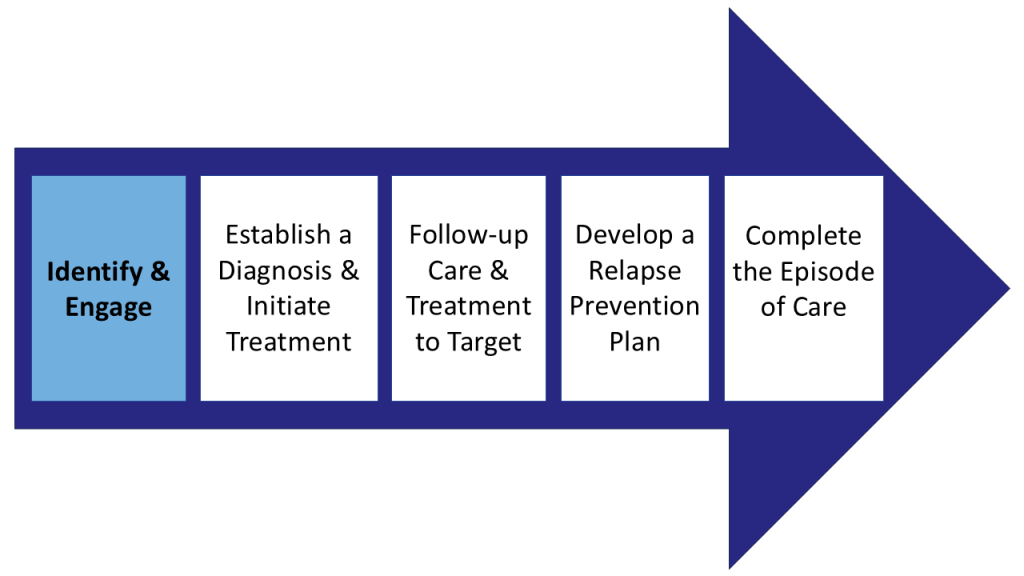
Phase 1: Identify & Engage

  • Behavioral health screening &/or population health report, &/or PCP assessment to identify patients
  • Introduce CoCM
  • Consent patients to participate in CoCM
  • Connect patients to the Behavioral Health Care Manager (BHCM)
  • When suicidality is identified through the behavioral health screening process, it is important to have a protocol in place
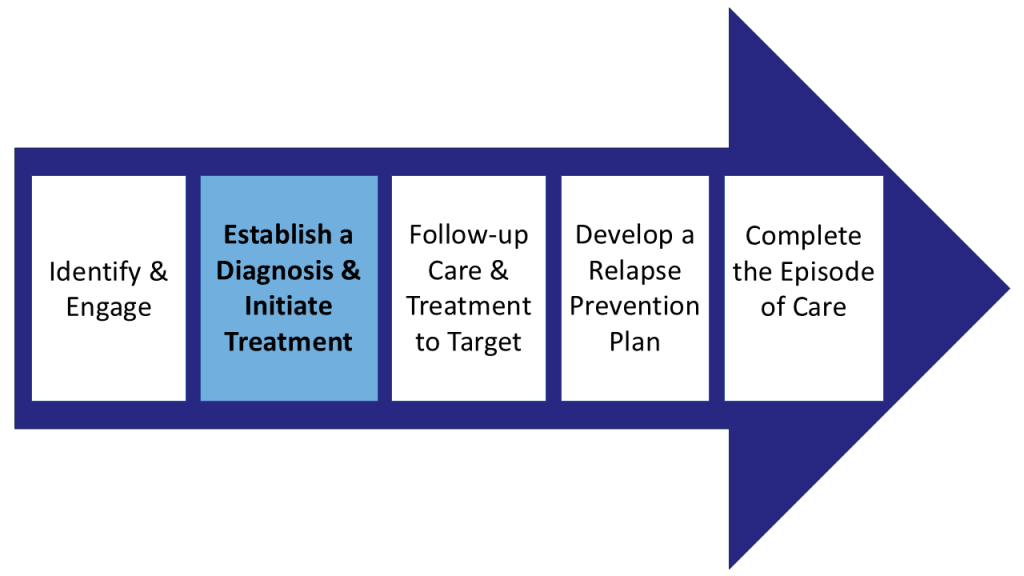
Phase 2: Establish a Diagnosis & Initiate Treatment

  • BHCM completes Initial Assessment. Enroll the patient in CoCM and add them to the registry.  
  • Generate a provisional diagnosis as a CoCM team (PCP, Psychiatric Consultant, BHCM)
  • Explore treatment options with the patient (brief evidence- based behavioral interventions, medications, or both)
  • Communicate treatment plans with the CoCM team
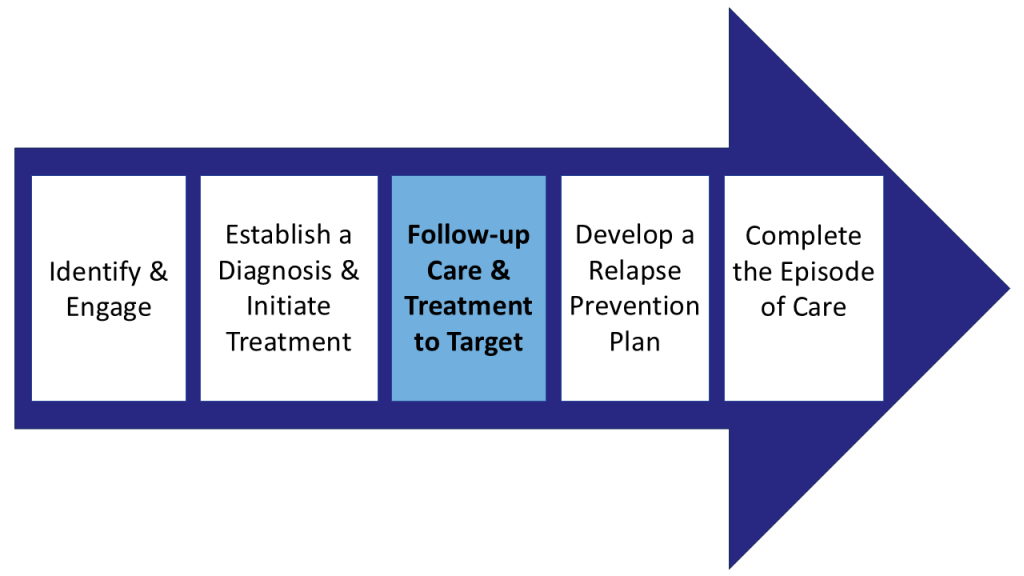
Phase 3: Follow-up Care & Treatment to Target

  • Proactive and continuous outreach from BHCM to the patient
  • Track patient progress in a registry
  • Use a registry to identify patients who need to be discussed at the Systematic Caseload Review (SCR)
  • Hold SCR weekly sessions between the BHCM and the Psychiatric Consultant
  • Consider the frequency for administration of symptom monitoring tools (e.g. PHQ-9, GAD-7, PCL-5, etc.)
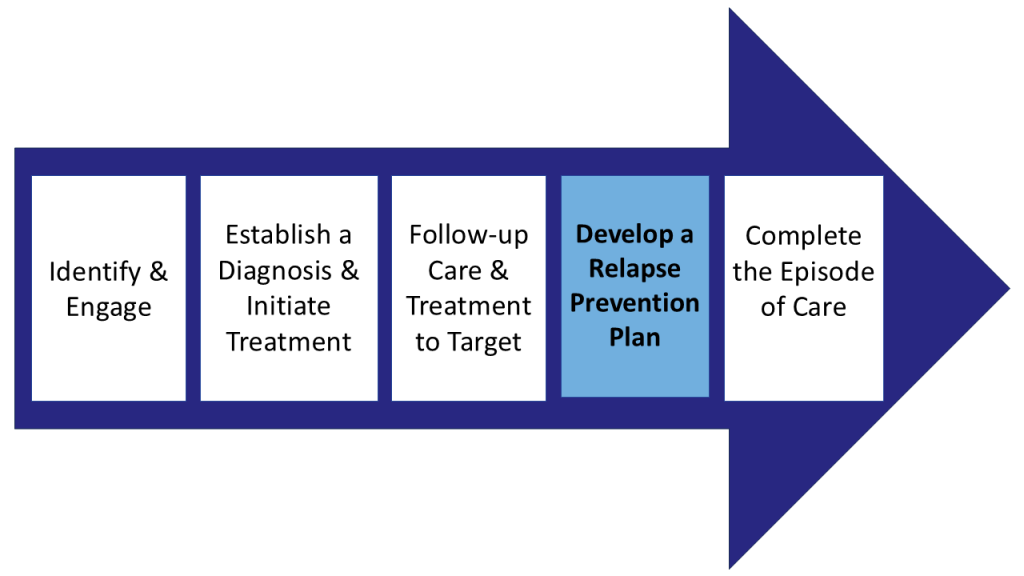
Phase 4: Develop a Relapse Prevention Plan

  • Determine criteria to begin a Relapse Prevention Plan (RPP)
  • BHCM initiates RPP with the patient
  • Determine how often to connect with the patient during the monitoring phase
  • Consider how RPP will be documented, stored, and communicated with the patient, as well as the CoCM team
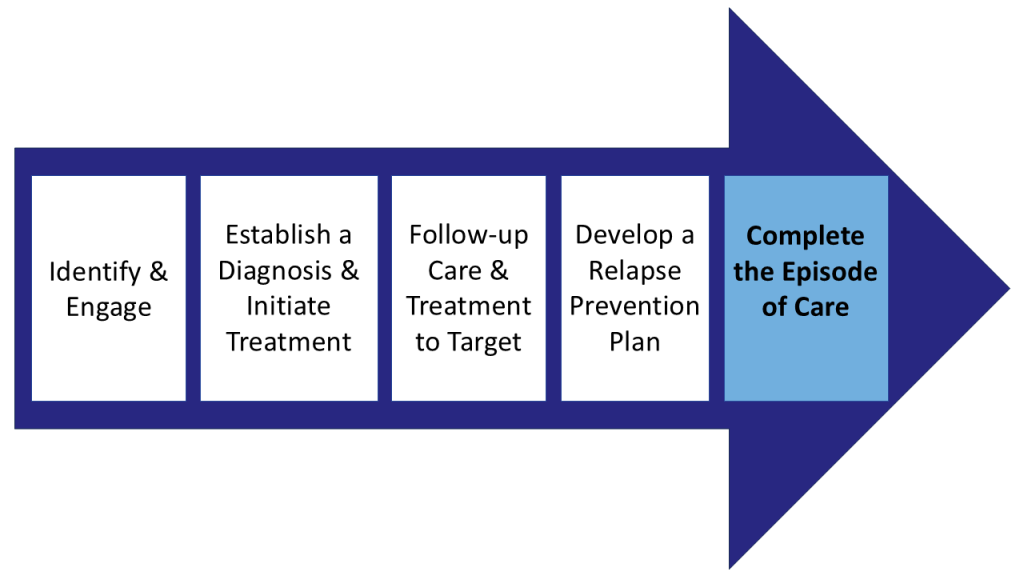
Phase 5: Complete the Episode of Care

  • Develop a workflow for each possible completion pathway:
  • Transition improved patients back to their PCP for follow-up care, with the option to return for another episode of CoCM if symptoms worsen
  • Referral to specialty behavioral health for patients with severe symptoms that are not improving in CoCM
  • Discontinue the episode for patients who cannot be reached

Need help building your workflow?

Behavioral Health Care Manager Role and Job Description

The Behavioral Health Care Manager is responsible for coordinating and supporting mental health care within the clinic and for coordinating referrals to clinically indicated services outside the clinic. The Behavioral Health Care Manager may provide evidence-based treatments or work with other mental health providers when such treatment is indicated.

The job description below provides a comprehensive list of the duties and responsibilities required of a Behavioral Health Care Manager.

Psychiatric Consultant Role and Job Description

The Psychiatric Consultant supports the prescribing medical provider and Behavioral Health Care Manager in treating patients with behavioral health problems. They will typically consult with the Behavioral Health Care Manager on a weekly basis to review the treatment plan and provide treatment suggestions for patients who are new or not improving as expected.

The resource below includes a PDF of a comprehensive description of the duties, responsibilities, resource requirements and typical workload of a Psychiatric Consultant.

Create a Shared Vision for Collaborative Care

A shared organizational vision is a concrete way for team members within an organization to understand the purpose of a program. A powerful vision statement will stretch expectations and professional aspirations while helping staff step outside of their comfort zone. Visioning is an important process that provides focus and enables Collaborative Care (CoCM) teams to build a shared understanding of their common purpose and future goals.

Use the following guide (below) to facilitate the development of a shared vision of CoCM that maps onto existing behavioral health services. The document goes over why a shared vision is important and the steps that are required to create a shared vision within a CoCM framework.

Help Clinic Staff Talk with Patients About the PHQ-9

This tool is designed to help clinic support staff with answers to frequent questions they may hear from patients about the PHQ-9.

It’s best for support staff to have the opportunity to role play and practice before using the PHQ-9 with patients. It can also be helpful for support staff to keep this someplace where they can refer to it, as needed, when they get questions from patients.

Comparing Collaborative Care to Usual Care

Introduction:

Compared with usual care, Collaborative Care has been shown to improve the effectiveness of depression treatment and lower total healthcare costs. This handout outlines those differences using data from the IMPACT trial.

A printable PDF is available for download; however, please note that this document may not conform to the WCAG-2 accessibility standards.

Comparing Collaborative Care to Usual Care

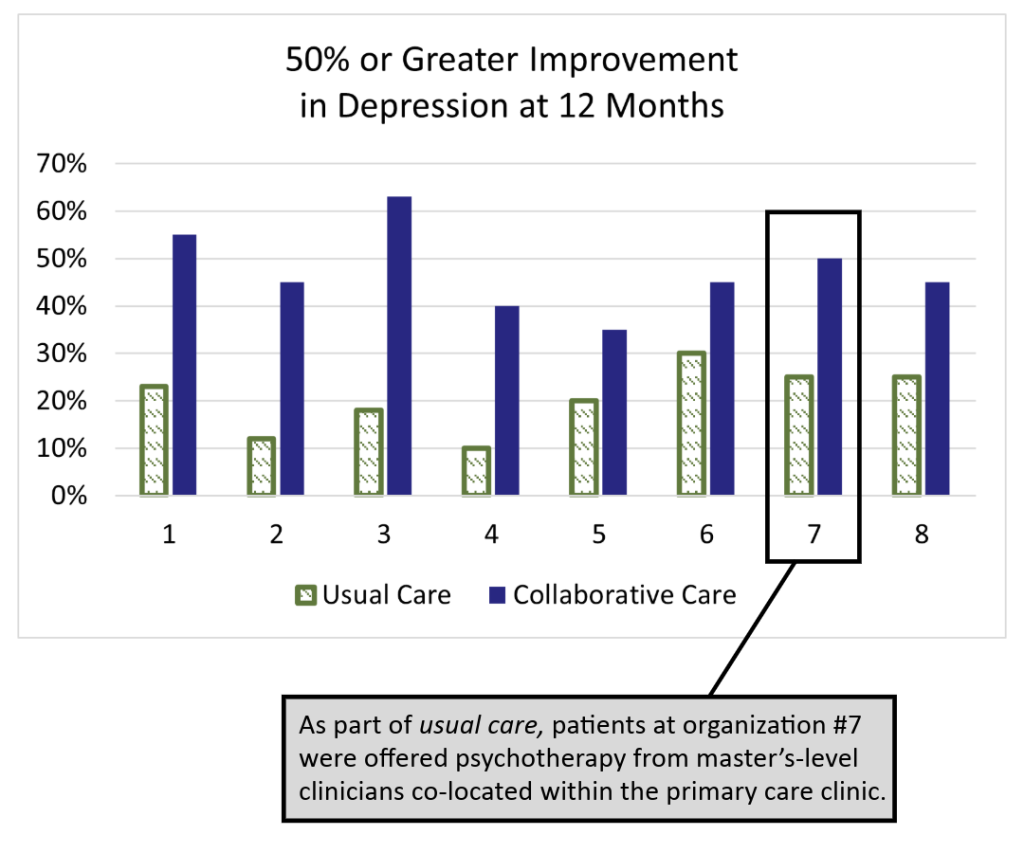
The IMPACT (Improving Mood: Providing Access to Collaborative Treatment) trial focused on depressed, older adults. Half were randomly assigned to receive the depression treatment usually offered by participating clinics, and half were randomly assigned to receive collaborative care. Collaborative care more than doubled the effectiveness of depression treatment and reduced total healthcare costs at the same time (JAMA, 2002).

A bar graph titled "50% of Greater Improvement in Depression at 12 Months" compares the effectiveness of Usual Care and Collaborative Care across eight different clinics. The y-axis represents the percentage, ranging from 0% to 70%. The x-axis lists clinics numbered from 1 to 8. For each group, there are two bars: a green bar with diagonal stripes representing Usual Care and a solid blue bar representing Collaborative Care. In all groups, Collaborative Care shows higher percentages of improvement compared to Usual Care. A box around the bars above "7" points to text reading, "As part of usual care, patients at organization #7 were offered psychotherapy from master's-level clinicians co-located within the primary care clinic.

Usual Care

50% of study patients used antidepressants at the time of enrollment, but were still significantly depressed.

70% of usual care patients received medication therapy from their PCP and/or a referral to specialty behavioral health.

Only 20% of patients showed significant improvements after one year, which matches national data for depression treatment in primary care.

Collaborative Care

On average, twice as many patients significantly improved. The difference was statistically significant in all eight healthcare settings. Why?

  • Patient-Centered Team Care
  • Population-Based Care
  • Measurement-Based Treatment to Target
  • Evidence-Based Care
  • Accountable Care

Example Psychiatric Consultant Services Contract

An example of a Psychiatric Consultant services agreement between a Community Mental Health Center and a Federally Qualified Health Center for organizations that may be interested in contracting for Psychiatric Consult services.

Please note: Contract language and template example is provided with permission from Valley Cities Behavioral Health Care.

Quick Guide on Behavioral Health Integration Services

The Centers for Medicare & Medicaid Services (CMS) annually updates Medicare guidelines and payments for services provided by medical treating providers for patients participating in a Collaborative Care program or receiving other behavioral health integration services. This handout summarizes the Medicare codes and guidelines. 

The payment structure may be used to treat patients with any behavioral health condition that is being treated by the billing practitioner, including substance use disorders.

Behavioral Health Integration Services Fact Sheet

The Centers for Medicare and Medicaid Services have an updated fact sheet detailing codes that can be used to bill for behavioral health integration (BHI) and Collaborative Care Model (CoCM) services.